
Views: 0 Author: Site Editor Publish Time: 2025-12-08 Origin: Site
Bringing a cat home is full of joy, but mastering cat litter use is one of the most essential skills for new owners—proper usage not only keeps your home clean and odor-free but also ensures your cat’s physical and mental health. Many cats reject the litter box or develop bad habits just because of incorrect litter use. Below is a professional, step-by-step guide to help you use cat litter properly and build a comfortable "toilet space" for your feline friend.

The litter box is the foundation of proper cat litter use, and its size, type, and quantity directly affect your cat’s acceptance:
• Size matters: Opt for a litter box that is at least 1.5 times your cat’s length (from head to tail). Adult cats need a spacious box to turn around and dig freely—too-small boxes often lead to cats eliminating outside the box.
• Type selection: Closed litter boxes reduce odor diffusion and offer privacy, suitable for shy cats or small living spaces; open litter boxes are easier to clean and have no entry barriers, ideal for kittens, elderly cats, or cats with mobility issues.
• Quantity rule: Follow the "n+1" principle—if you have n cats, prepare n+1 litter boxes. Multiple cats need separate toilet spaces to avoid territorial conflicts and ensure each cat has a clean option.
Different cat litters have distinct characteristics, and choosing the right one is key to smooth usage. Combine your cat’s preferences and home needs to select:
• Clumping clay litter: High clumping speed, easy to scoop, and good odor control—most cats love its texture. Note to choose low-dust variants to avoid respiratory irritation for cats and owners.
• Tofu litter: Plant-based, biodegradable, flushable (check if it’s compatible with your toilet), and low-dust, safe for kittens, pregnant cats, and owners with allergies. It clumps well and has natural faint scents, but needs timely cleaning to prevent mold in humid environments.
• Cassava litter: Cassava cat litter, 100% biodegradable, is an innovative plant-based litter made from cassava fibers.It contains no additives or chemical deodorants, zero pigments, zero fragrances, and zero formaldehyde. With smaller, more durable granules, it provides comfort paw feeling for cats. A growing number of consumers are choosing cassava cat litter for its unique advantages.
litter: Super absorbent and long-lasting odor control, with low dust and less litter consumption. However, it doesn’t clump, so the entire box needs regular replacement, and some cats may dislike its hard texture.
• Tips for transition: When changing cat litter, mix the new litter with the old one gradually (70% old + 30% new first, then adjust the ratio over 3-5 days) to let your cat adapt—sudden replacement often causes litter box rejection.
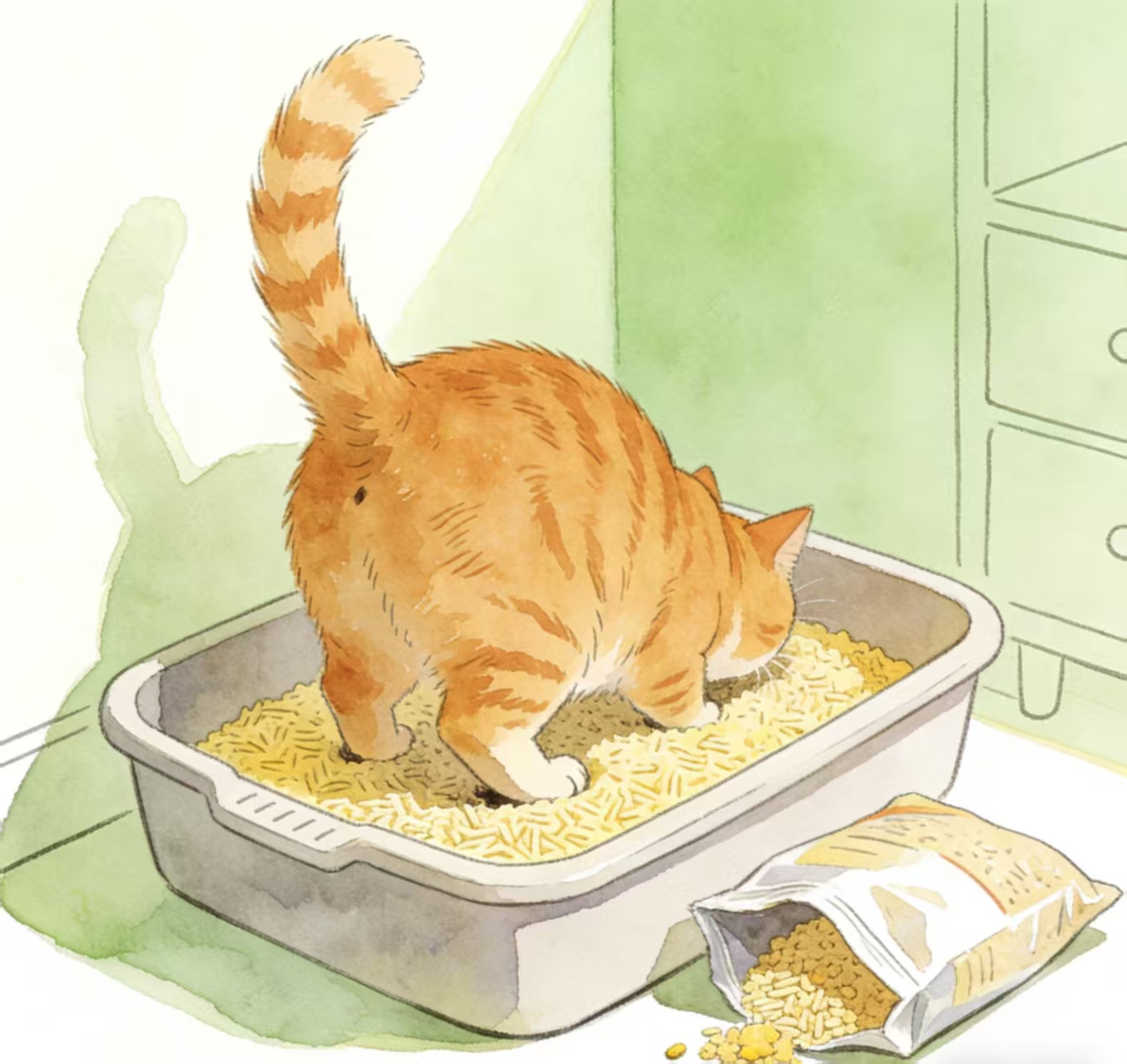
Putting too much or too little litter affects your cat’s digging behavior and litter use effect:
• Ideal depth: 5-8cm is the golden standard. This depth allows cats to dig naturally (a natural instinct for hiding waste) and ensures clumping litter forms firm clumps without sticking to the bottom of the box.
• Avoid extremes: Less than 3cm of litter leads to waste sticking to the box, hard to clean, and may make cats reluctant to use it; more than 10cm wastes litter, increases cleaning difficulty, and clumps are easier to break when scooping.
Cleanliness is the core of keeping the litter box usable—dirty litter boxes are the top reason for cats’ inappropriate elimination:
• Daily scooping: Remove clumps and solid waste once or twice a day. Timely cleaning reduces odor and prevents bacteria growth, and cats are more willing to use a clean litter box (they are extremely hygienic animals!).
• Weekly cleaning: Empty the entire litter box, wash it with warm water and neutral detergent (avoid strong-scented cleaners—cats hate chemical smells), dry it completely, then add new litter.
• Monthly replacement: Replace the litter box every 6-12 months. Even with regular cleaning, bacteria and stains will accumulate on the box surface over time, affecting your cat’s health.

The placement of the litter box also plays a vital role in your cat’s usage:
• Quiet & private: Put it in a low-traffic area (avoid living rooms, kitchens, or near air conditioners/doors) where cats won’t be disturbed while using it.
• Away from food and water: Cats never eliminate near their food and water sources—keep the litter box at least 1 meter away to meet their hygiene needs.
• Easy access: Ensure kittens, elderly cats, or disabled cats can reach the litter box easily—avoid placing it on high shelves or behind heavy furniture.
If your cat still refuses the litter box after following these steps, check if the litter type is unsuitable, the box is too dirty, or the location is improper. Be patient—never scold or punish your cat for inappropriate elimination, as it will only make them fear the litter box more.
Proper cat litter use is a small detail but a big part of your cat’s happy life. Follow this guide to keep your home fresh and your feline companion comfortable—enjoy the warm time with your lovely cat!


